Materials
The choice of material affects an instrument’s sound, response, feel, and appearance.
Different alloys allow for customization to suit specific sound preferences, playing styles, and personal requirements.
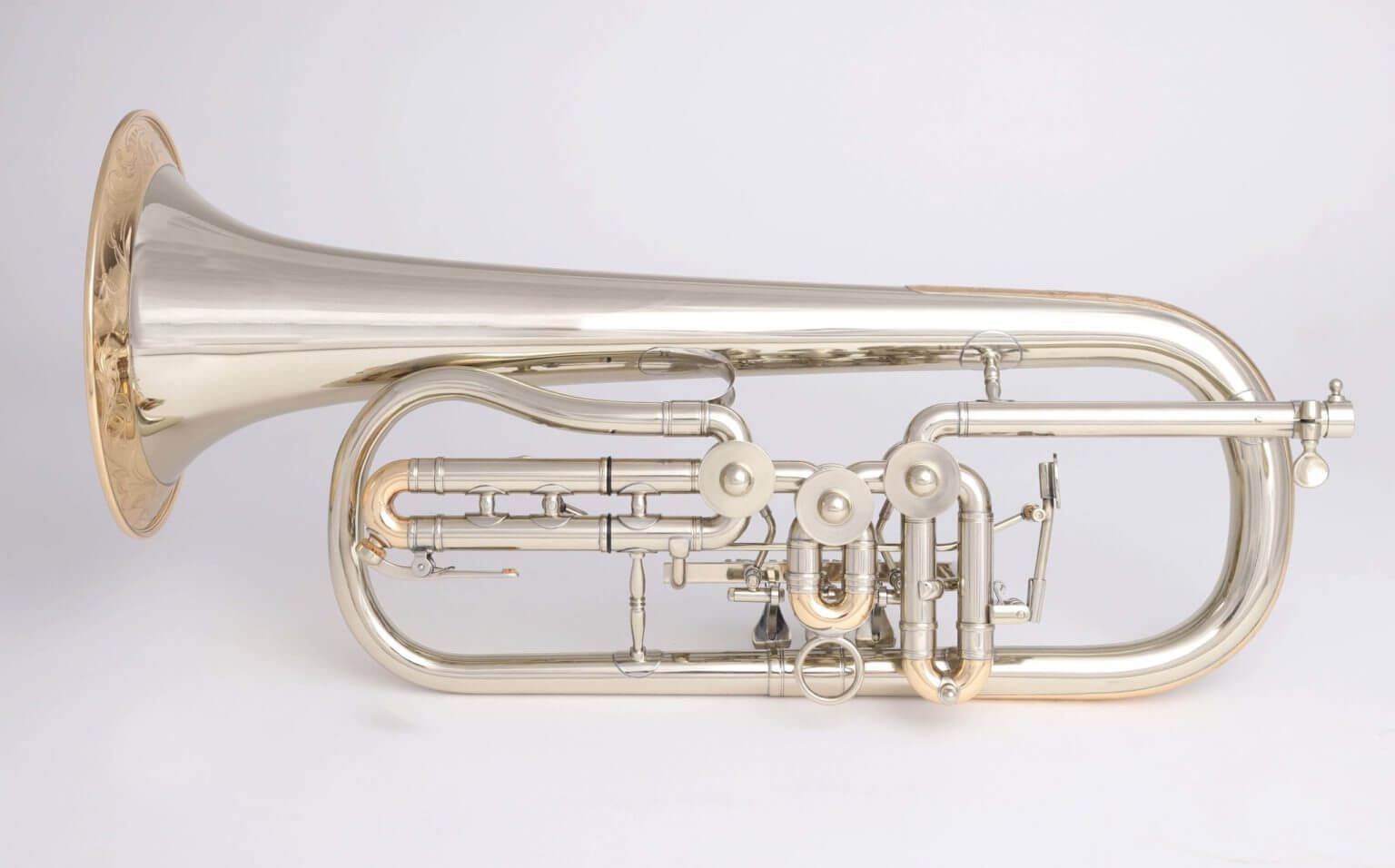
Nickel silver
The material combines high stability, durability, and excellent acoustic properties.
Nickel silver is a shiny alloy of copper, nickel, and zinc that ranges in color from silvery-white to slightly yellowish.
Because of its nickel content, the material is harder, more corrosion-resistant, and more durable than brass.
The higher hardness makes processing significantly more difficult and requires greater craftsmanship.
In terms of vibration, however, it offers advantages and contributes to a precise response and clear sound development.
Ringing example gold brass
Ringing example nickel silver
Nickel-silver instruments became our specialty.
This material combines outstanding characteristics in terms of responsiveness, tone, and durability with a distinctive appearance.
Especially when combined with gold-plated brass accents, these instruments take on a character all their own.
In addition to nickel silver, other alloys—ranging from brass to bronze—are, of course, also possible.
This results in instruments that are tailored to the musical vision and needs of each individual musician.
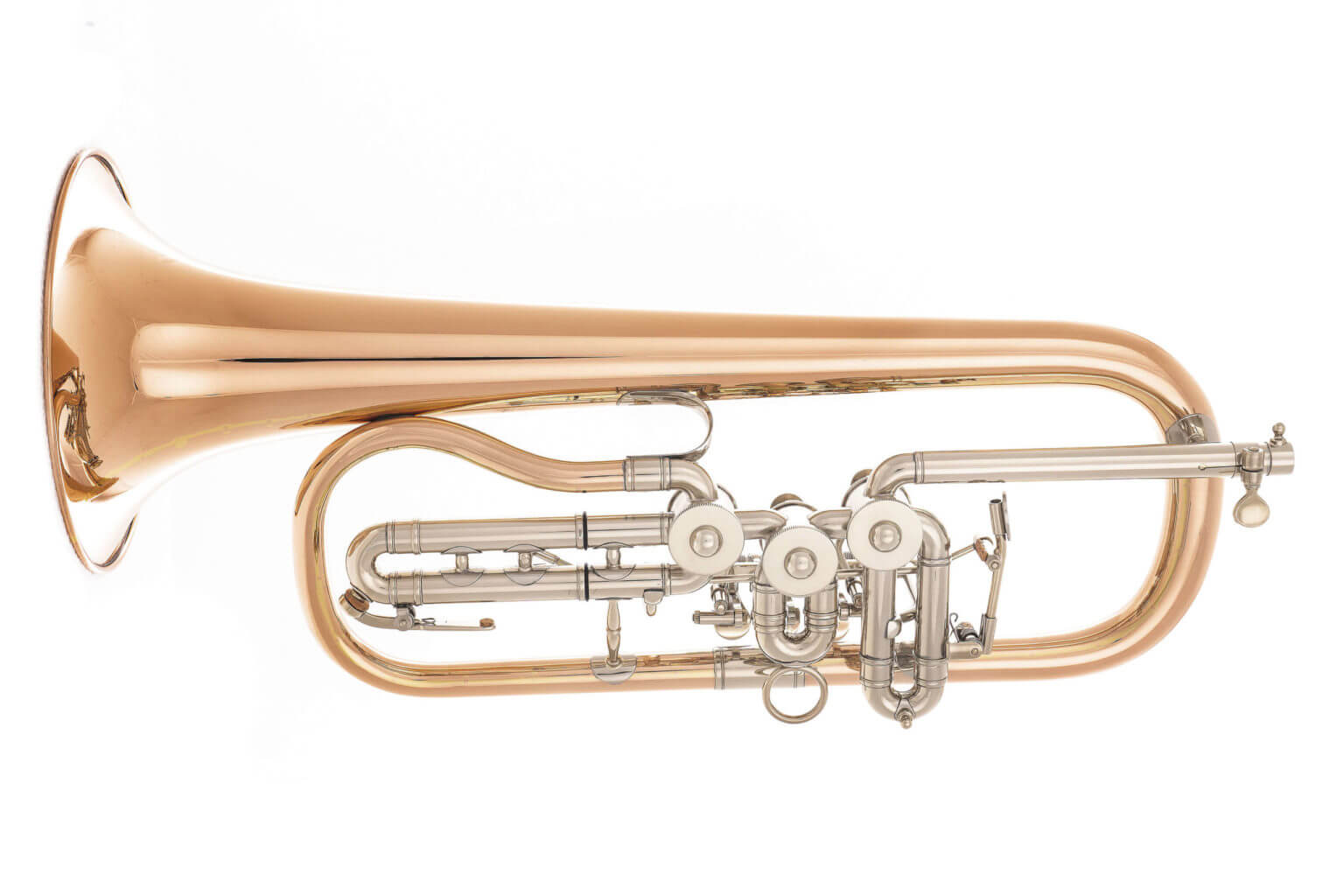
Bronze
Bronze is a copper-tin alloy with a very high copper content of over 90%.
This material produces a dark, warm tone and is characterized by a particularly resonant sound without coming across as intrusive.
Bronze is highly durable and long-lasting, making it particularly well-suited for musicians who prefer a full, warm, yet distinct sound
Ringing example bronze
The bells for our instruments are crafted by Bernd Sandner in Marktneukirchen
and form the foundation for the high quality of our instruments.